Bluetooth jamming represents a significant threat to wireless communications infrastructure, capable of disrupting everything from personal device connectivity to critical industrial control systems. This guide demonstrates how the M5Stick CPlus 2 combined with the NRF24L01 module can execute sophisticated jamming attacks against Bluetooth and WiFi networks, revealing vulnerabilities in our increasingly connected world.
Table of Contents
- Attack Overview
- Prerequisites and Setup
- NRF24L01 Module Configuration
- Device Configuration
- Jamming Operations
- Real-World Impact
- Detection and Countermeasures
- Legal Considerations
Attack Overview
Bluetooth jamming attacks exploit the shared 2.4GHz ISM band used by Bluetooth, WiFi, and other wireless technologies. By generating interference patterns across critical frequencies, attackers can effectively disable wireless communications within a targeted area, causing widespread connectivity disruption.
Prerequisites and Setup
This guide builds upon our established M5Stick CPlus 2 platform configuration. For comprehensive device setup instructions, firmware installation, and Bruce firmware configuration, please reference our foundational guide:
Additional Hardware Requirements
Bluetooth jamming operations require specific hardware components beyond the base M5Stick setup:
Jamming-Specific Components:
- NRF24L01 Module: 2.4GHz transceiver for signal generation (~$3)
- Jumper Wires: Male-to-female connections (same as CC1101 setup)
- Power Source: Adequate power supply for sustained jamming operations
- Optional: External antenna for increased jamming range
NRF24L01 Module Configuration
The NRF24L01 module operates in the same 2.4GHz frequency band as Bluetooth and WiFi, making it ideal for interference generation.
Connection Diagram
The NRF24L01 module uses identical wiring to the CC1101 module from our previous RF projects:
# NRF24L01 to M5Stick CPlus 2 Wiring:
# (Same connection pattern as CC1101 module)
# VCC (NRF24L01) -> 3.3V (M5Stick)
# GND (NRF24L01) -> GND (M5Stick)
# SCK (NRF24L01) -> GPIO 13 (M5Stick)
# MISO (NRF24L01) -> GPIO 11 (M5Stick)
# MOSI (NRF24L01) -> GPIO 12 (M5Stick)
# CSN (NRF24L01) -> GPIO 10 (M5Stick)
# CE (NRF24L01) -> GPIO 2 (M5Stick)
# IRQ (NRF24L01) -> GPIO 35 (M5Stick) [Optional]Hardware Verification
After completing the wiring, verify successful module detection:
# Verification checklist:
# - Secure connections at all junction points
# - Correct voltage levels (3.3V, not 5V)
# - Proper ground connections established
# - No short circuits between adjacent pins
# - Module LED indicators (if present) functioning
Device Configuration
Configuring the NRF24L01 module requires specific settings within the Bruce firmware to enable jamming capabilities.
Accessing NRF24 Functions
Navigate to the NRF24 section through the Bruce firmware menu system:
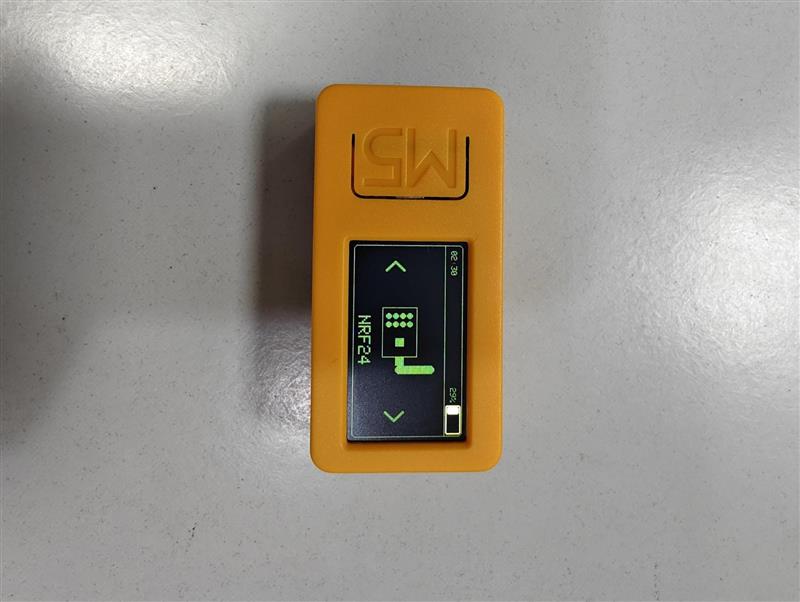
# Navigation path:
# Main Menu -> NRF24 -> Configuration Options
# Available functions:
# - Pin Configuration
# - Module Detection
# - Frequency Settings
# - Power Level Control
# - Jamming Operations
Pin Configuration Setup
Configure the NRF24L01 module pins and select the appropriate legacy mode:
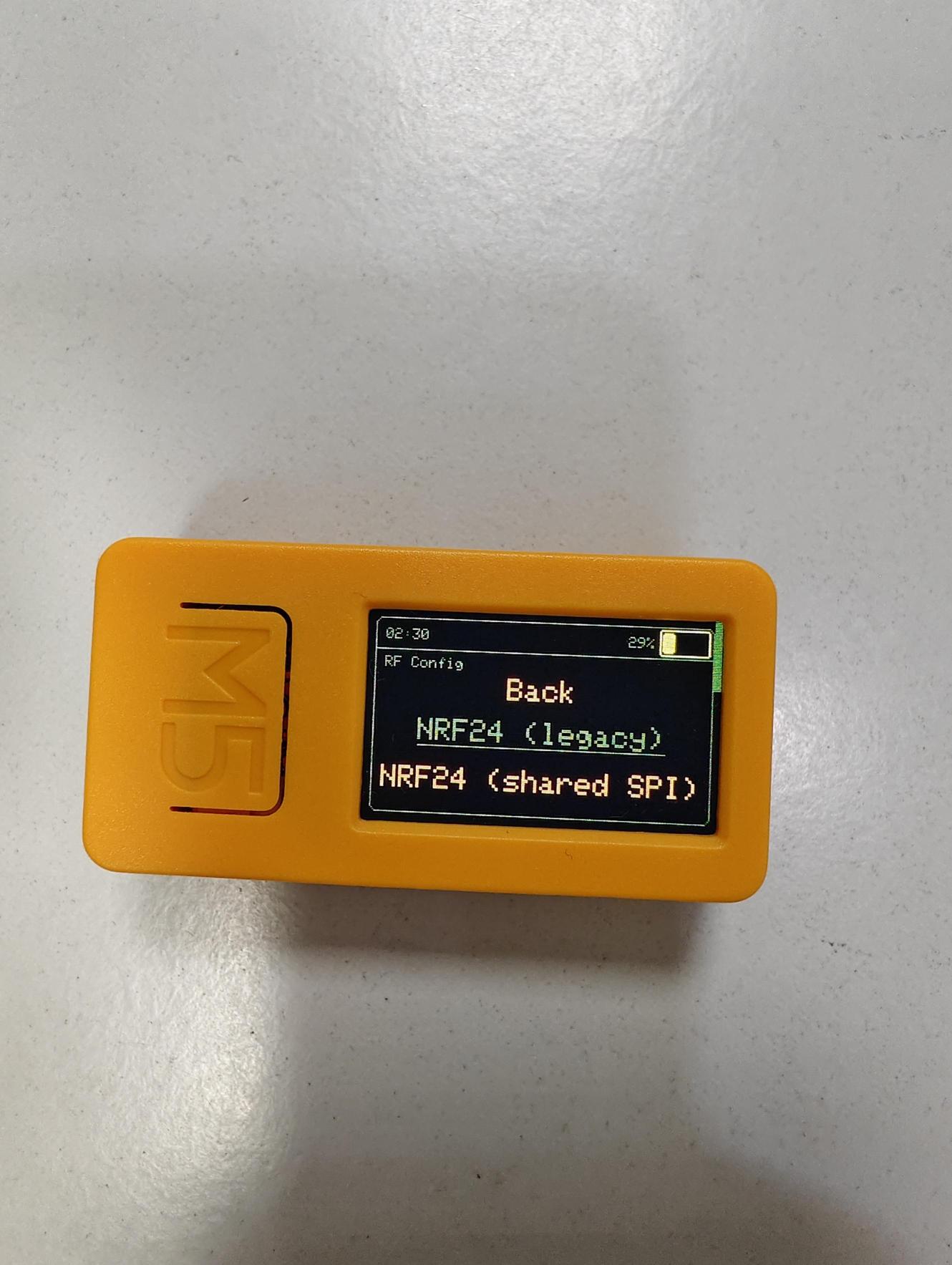
# Configuration steps:
# 1. Navigate to Config -> Pin Settings
# 2. Verify SPI pin assignments match wiring
# 3. Select "NRF24 Legacy" mode for compatibility
# 4. Test module communication
# 5. Confirm successful initialization
The legacy mode ensures compatibility with the Bruce firmware's jamming functions and provides stable operation across different NRF24L01 module variants.
Jamming Operations
Once configured, the NRF24L01 module can generate interference across the 2.4GHz spectrum, targeting Bluetooth and WiFi communications.
Accessing Jamming Functions
Navigate to the dedicated jamming interface:
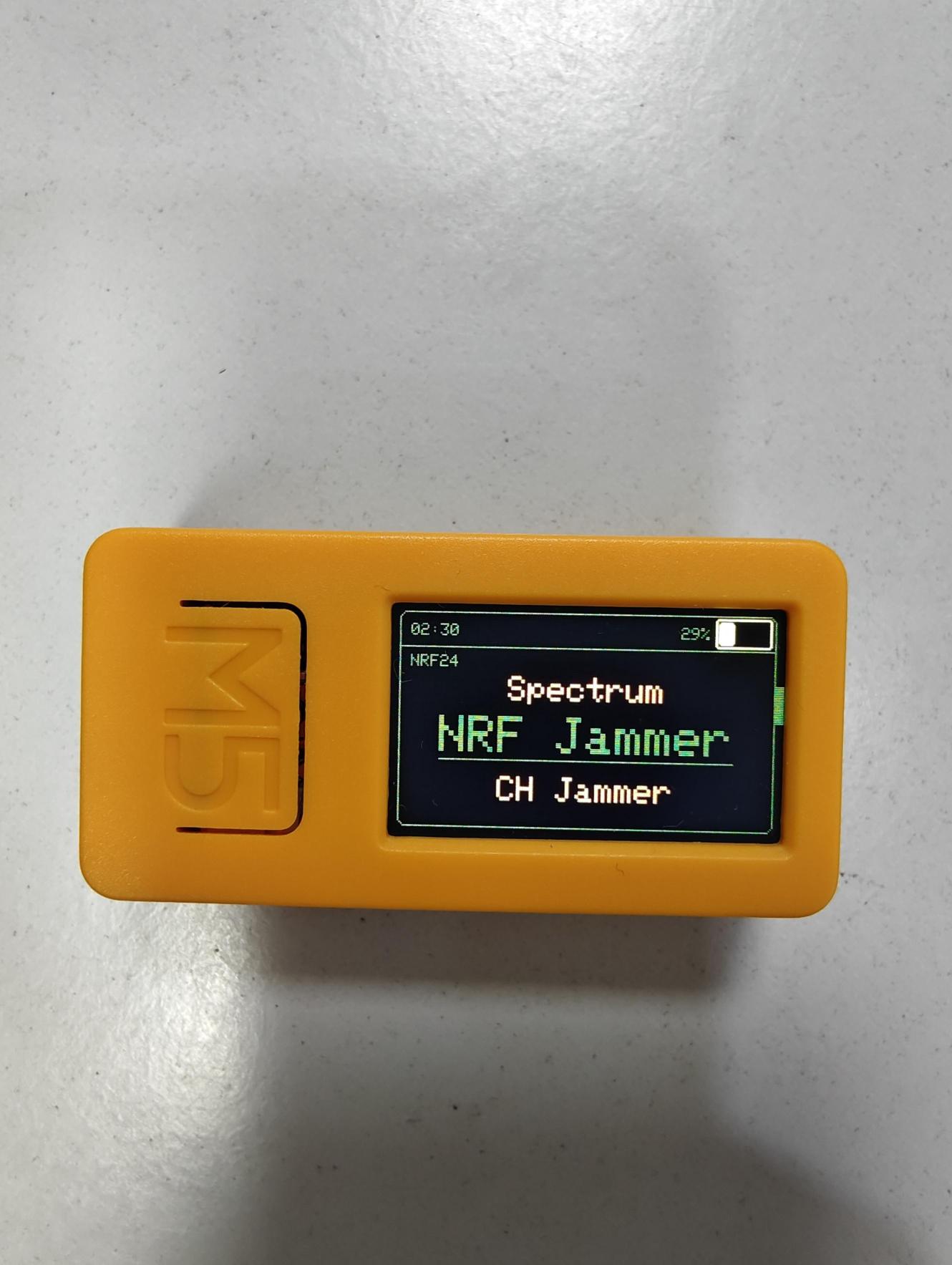
# Jamming interface access:
# Main Menu -> NRF24 -> NRF Jammer
# Jamming options:
# - Target selection (WiFi/Bluetooth/Both)
# - Frequency range specification
# - Power level adjustment
# - Duration settings
# - Pattern selection
Target Selection and Configuration
The jamming system allows precise targeting of different wireless protocols:
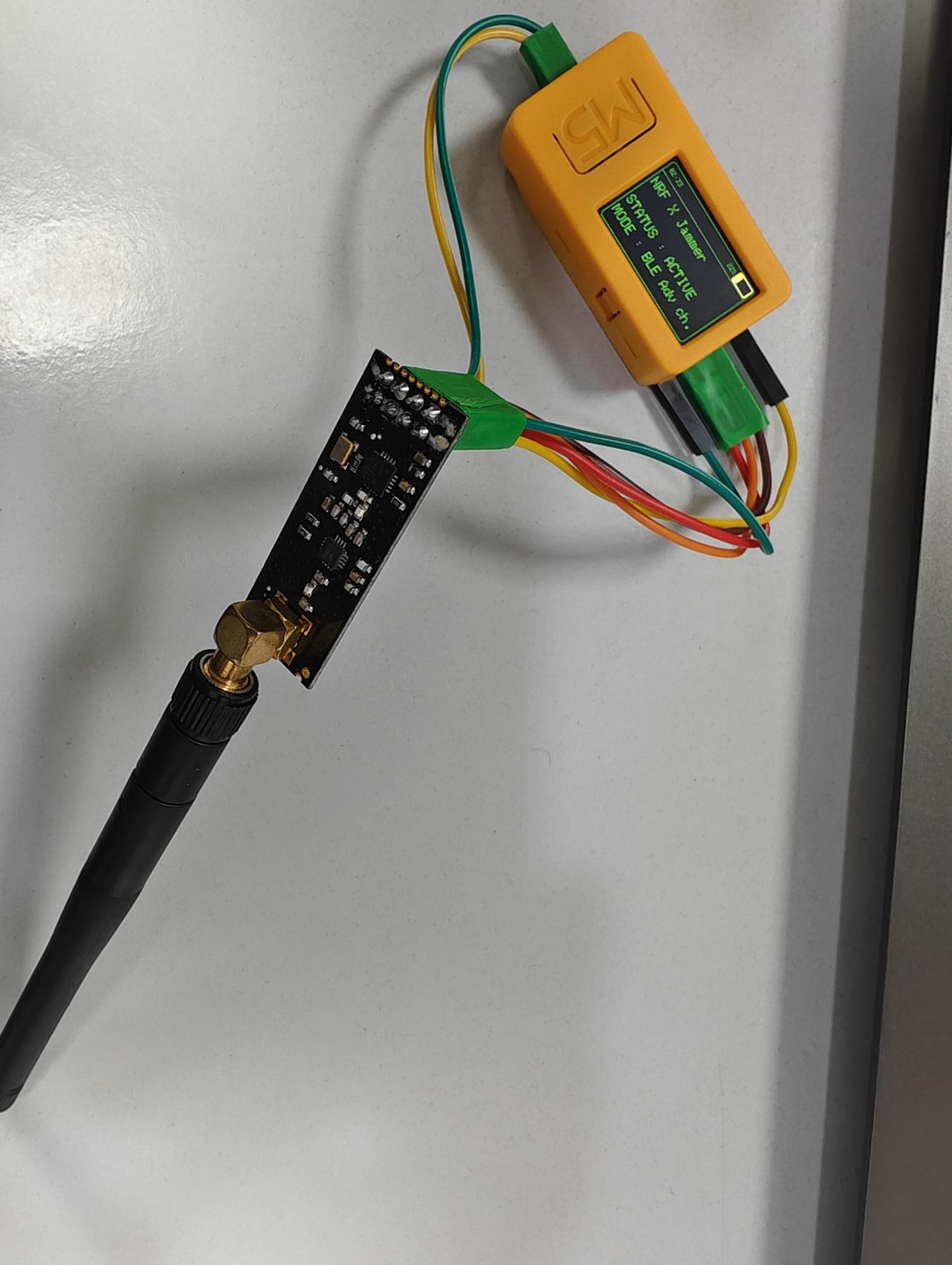
# Available jamming targets:
# - WiFi Networks (2.4GHz channels 1-14)
# - Bluetooth Classic (2402-2480MHz)
# - Bluetooth Low Energy (BLE)
# - Combined WiFi+Bluetooth jamming
# - Custom frequency ranges
Jamming Execution
Once targets are selected, the jamming operation begins immediately:
# Jamming operation characteristics:
# - Immediate effect on target devices
# - Continuous interference generation
# - Real-time power level adjustment
# - Frequency hopping patterns
# - Adaptive interference algorithmsReal-World Impact
Bluetooth jamming attacks can have far-reaching consequences across multiple technology sectors and use cases.
Consumer Device Impact
Affected Consumer Technologies:
- Audio Devices: Bluetooth speakers, headphones, and earbuds cease functioning
- Mobile Connectivity: Phone-to-car connections, fitness trackers, smartwatches
- Home Automation: Smart home devices, IoT sensors, wireless controllers
- Gaming: Wireless controllers, VR headsets, gaming peripherals
- Computing: Wireless keyboards, mice, and peripheral devices
Enterprise and Industrial Impact
# Critical infrastructure vulnerabilities:
# - Wireless sensor networks disrupted
# - Industrial automation systems affected
# - Point-of-sale terminal connectivity issues
# - Asset tracking systems compromised
# - Wireless presentation systems disabled
Security and Emergency Service Impact
- Communication Systems: Disruption of Bluetooth-enabled emergency equipment
- Medical Devices: Wireless medical monitoring equipment affected
- Security Systems: Bluetooth-based access controls compromised
- Vehicle Systems: Hands-free calling and navigation systems disabled
Jamming Range and Effectiveness
# Jamming characteristics:
# - Effective range: 10-50 meters (depending on power and environment)
# - Target specificity: Can focus on specific frequency bands
# - Duration: Limited by device battery and heat generation
# - Effectiveness: Near 100% disruption within range
# - Detection difficulty: Hard to locate source without specialized equipment
Detection and Countermeasures
Detecting and mitigating Bluetooth jamming requires specialized knowledge and equipment.
Detection Methods
Jamming Detection Techniques:
- Spectrum Analysis: RF spectrum analyzers show interference patterns
- Signal Strength Monitoring: Unusual RF energy levels indicate jamming
- Device Behavior Analysis: Simultaneous failures across multiple devices
- Direction Finding: Specialized equipment can locate jammer source
- Pattern Recognition: Distinctive interference signatures
Technical Countermeasures
# Anti-jamming strategies:
# - Frequency hopping spread spectrum (FHSS)
# - Power level increases to overcome interference
# - Alternative communication protocols (5GHz WiFi, wired connections)
# - Directional antennas to avoid jamming sources
# - Error correction and retransmission protocols
Organizational Response
- Incident Response: Rapid identification and response procedures
- Backup Systems: Wired alternatives to critical wireless systems
- Monitoring Infrastructure: Continuous RF environment monitoring
- Staff Training: Recognition of jamming attack indicators
- Law Enforcement: Immediate reporting of suspected jamming activities
Technical Detection Tools
# Professional detection equipment:
# - RF spectrum analyzers (Keysight, Rohde & Schwarz)
# - Handheld frequency counters
# - Software-defined radio (SDR) platforms
# - Specialized jamming detection software
# - Direction-finding antenna arrays
Legal Considerations
Signal jamming is heavily regulated worldwide due to its potential for widespread disruption and interference with critical communications.
Legal Restrictions
Regulatory Framework
# Key regulatory considerations:
# - FCC Part 15 regulations (United States)
# - International Telecommunication Union (ITU) standards
# - National telecommunications authority regulations
# - Emergency communications protection laws
# - Critical infrastructure protection statutes
Authorized Use Cases
Limited legitimate applications exist for jamming technology:
- Government Operations: Law enforcement and military applications
- Security Research: Authorized penetration testing and vulnerability assessment
- Educational Purposes: Academic research and cybersecurity training
- Private Testing: Controlled testing in shielded environments
Compliance Requirements
# Legal compliance for security research:
# - Written authorization from system owners
# - Confined testing environments (Faraday cages)
# - Limited duration and scope
# - Documentation of security purpose
# - Immediate cessation upon completion
Security Research Applications
Despite legal restrictions, understanding jamming techniques is crucial for cybersecurity professionals and researchers.
Legitimate Research Purposes
Authorized Security Applications:
- Vulnerability Assessment: Testing wireless system resilience
- Red Team Operations: Simulating advanced persistent threats
- Defense Development: Creating anti-jamming technologies
- Incident Response: Understanding attack methodologies
- Training Programs: Educating security professionals
Controlled Testing Environments
# Safe testing practices:
# - RF-shielded chambers (anechoic chambers)
# - Isolated network environments
# - Low-power testing configurations
# - Limited geographical scope
# - Continuous monitoring for interference
Future of Wireless Security
As wireless technologies proliferate, understanding jamming vulnerabilities becomes increasingly critical for system designers and security professionals.
Emerging Threats
- IoT Proliferation: More devices vulnerable to jamming attacks
- Critical Infrastructure: Increased reliance on wireless communications
- 5G Networks: New attack vectors and vulnerabilities
- Autonomous Systems: Jamming impacts on self-driving vehicles and drones
Defensive Evolution
# Next-generation anti-jamming technologies:
# - AI-powered interference detection
# - Adaptive frequency management
# - Mesh network resilience
# - Quantum-resistant communication protocols
# - Hybrid wired/wireless architectures
Conclusion
Bluetooth and WiFi jamming capabilities demonstrate critical vulnerabilities in our wireless-dependent infrastructure. The M5Stick CPlus 2 and NRF24L01 combination shows how accessible these attack techniques have become, requiring urgent attention from security professionals and system designers.
The immediate and widespread impact of jamming attacks - from consumer device disruption to critical infrastructure interference - highlights the importance of developing robust anti-jamming technologies and response procedures.
While these techniques provide valuable insights for authorized security research and red team operations, the severe legal penalties associated with unauthorized jamming cannot be overstated. Security professionals must balance the educational value of understanding these attacks with strict adherence to legal and ethical guidelines.